Beginner Japanese · Lesson 11
Say Where People and Things Are
Identify simple places and say where a familiar person or object exists using two bounded location patterns.
Japanese first
Start with a useful place answer
Ask and point to a place
Reading: みせはどこですか。あそこです。
You already know that どこ asks “where?” This fuller answer now lets you point to the place before looking at the complete place-word set.
Three short conversations
Meet ここ・そこ・あそこ in short conversations
Read each question and answer. Then look at the place the answer shows.
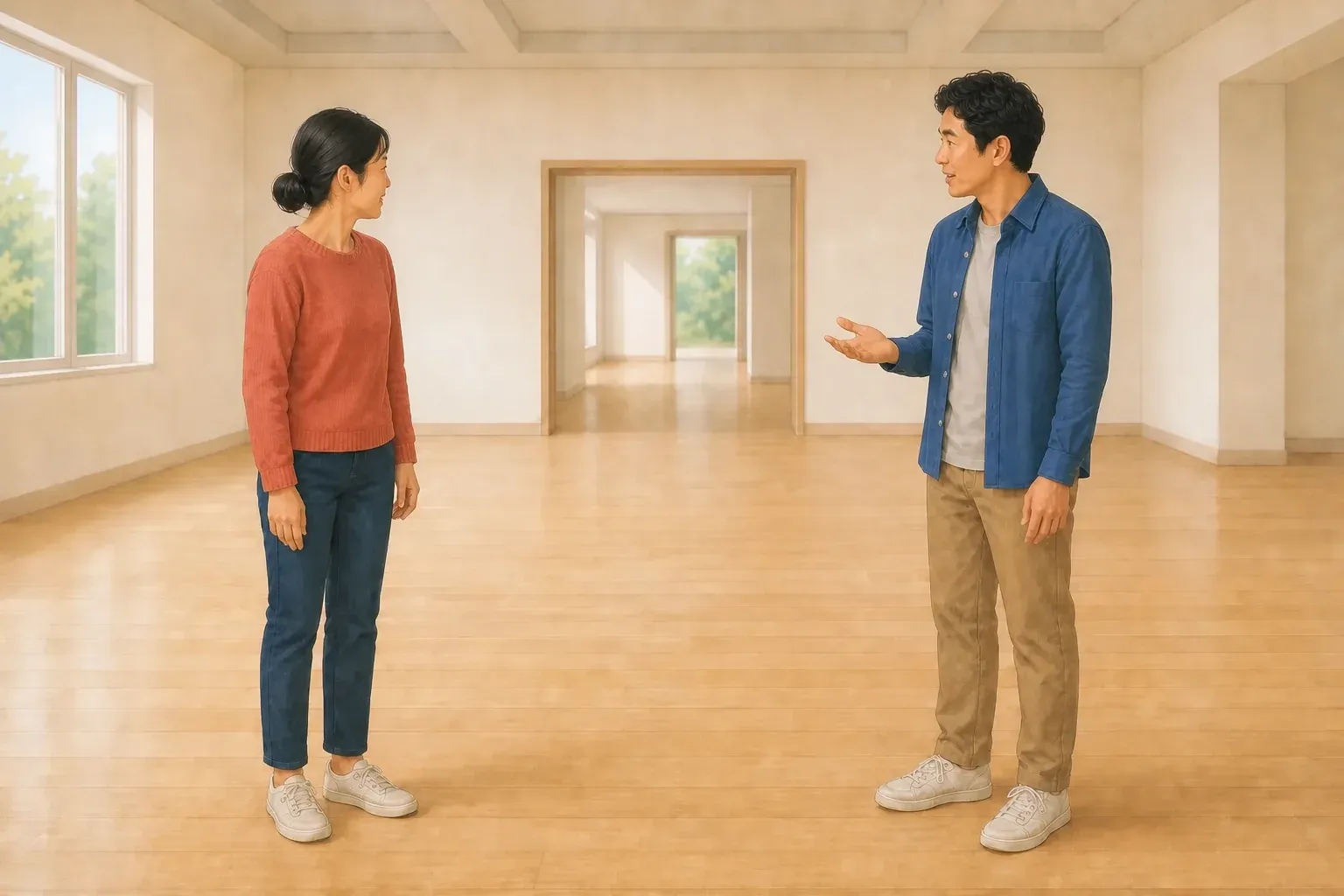
Conversation 1
ここ: the speaker’s place
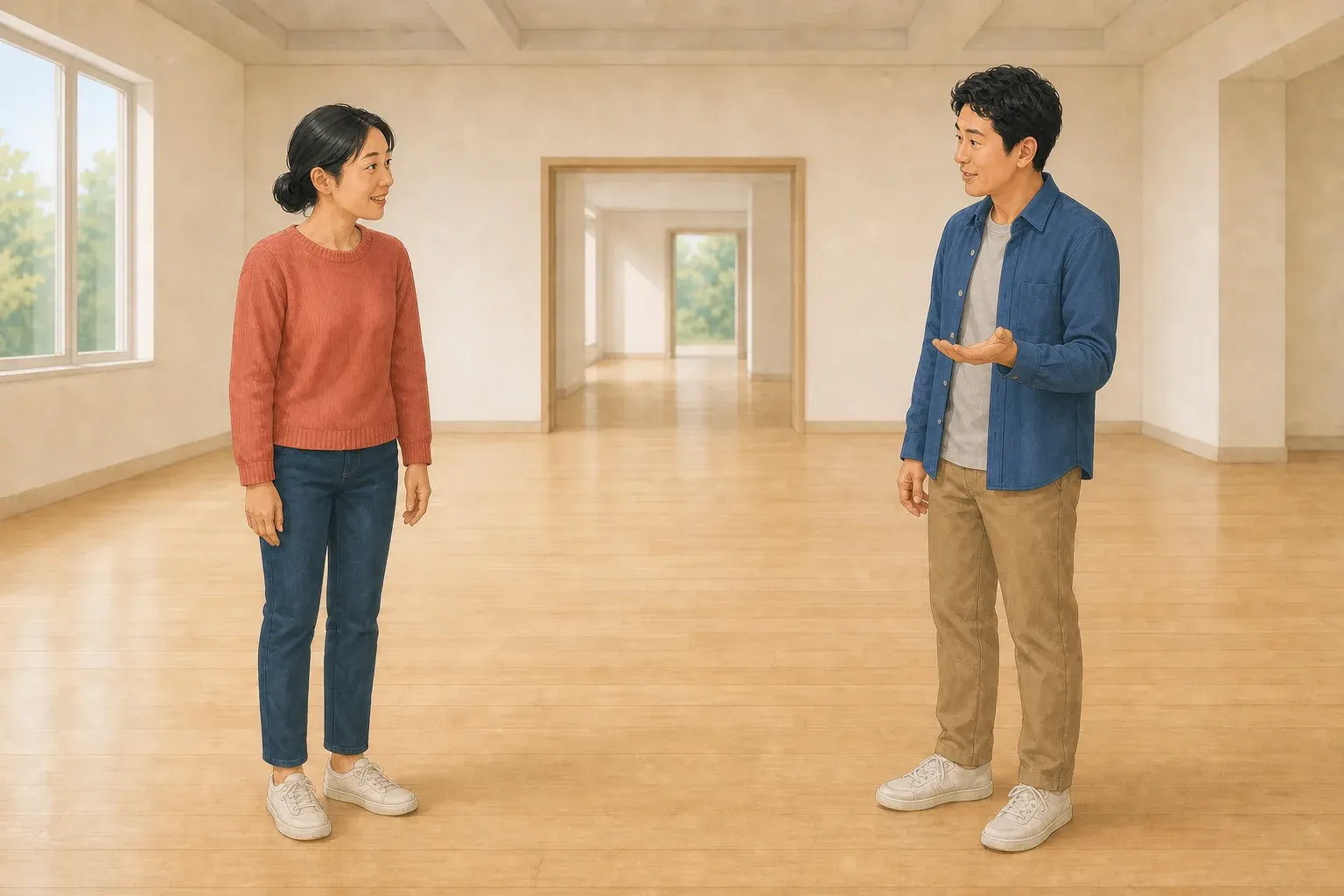
Question
どこですか。
Where is it?
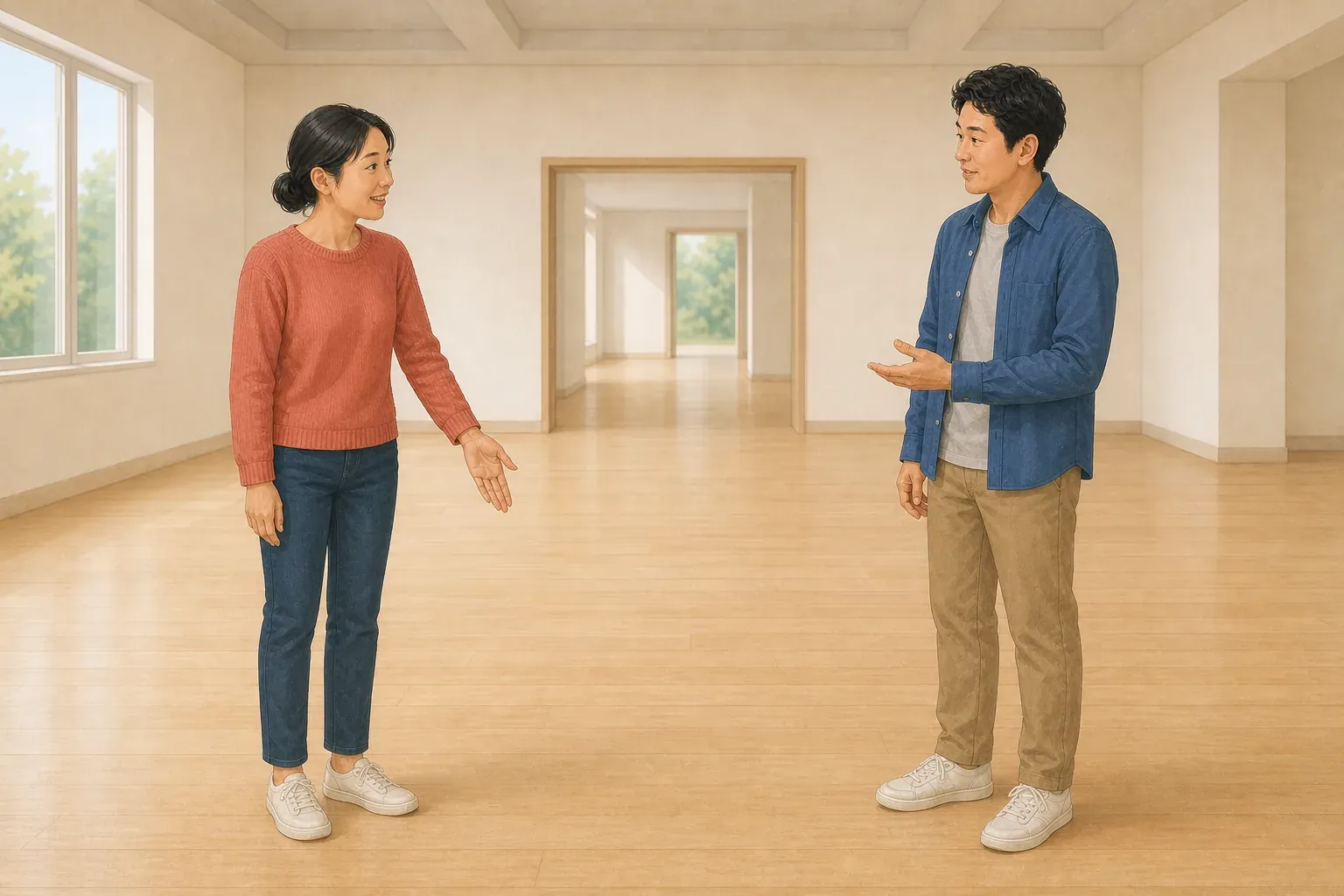
Answer
ここです。
It is here.
ここ is the place around the speaker.
Conversation 2
そこ: the listener’s place
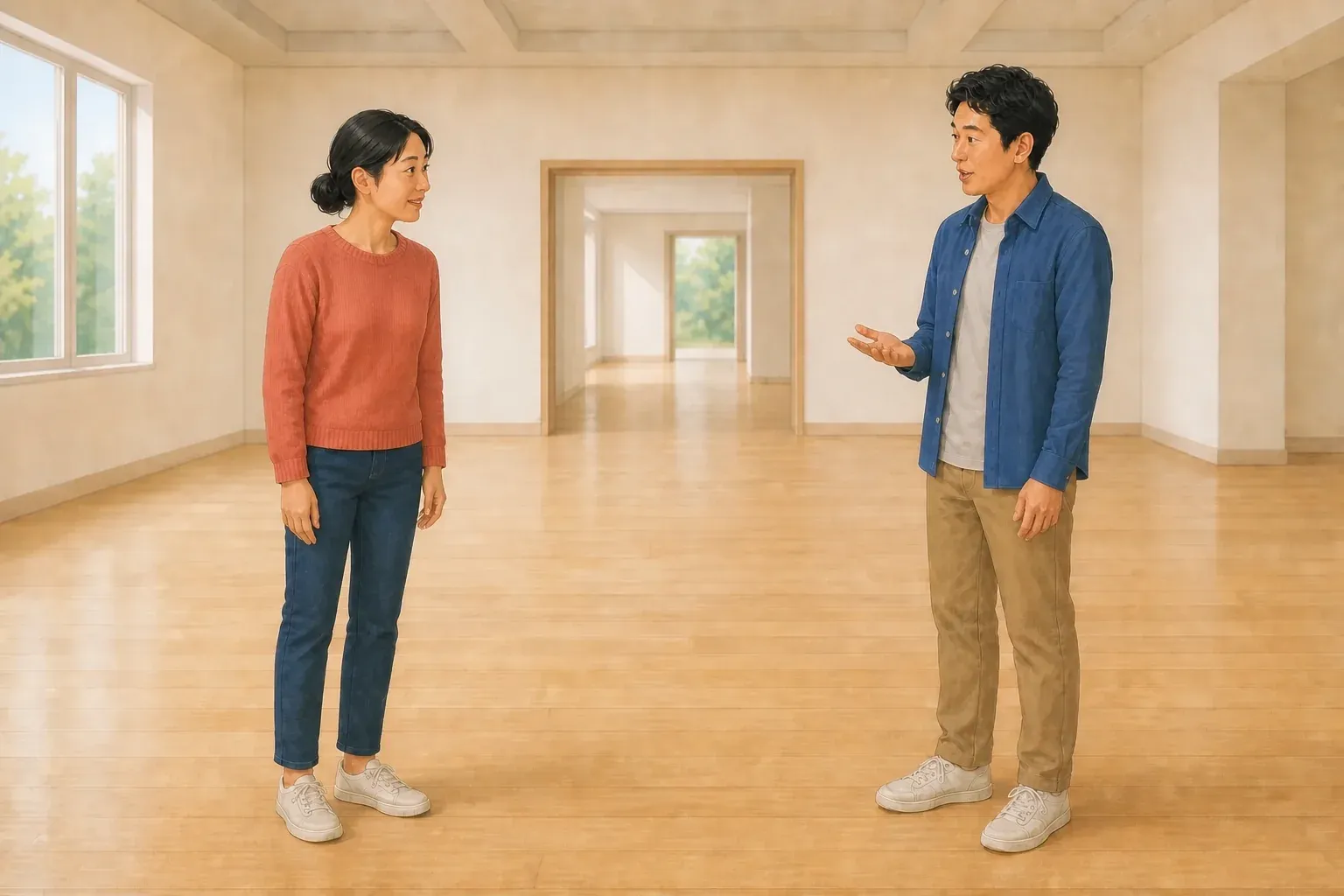
Question
どこですか。
Where is it?
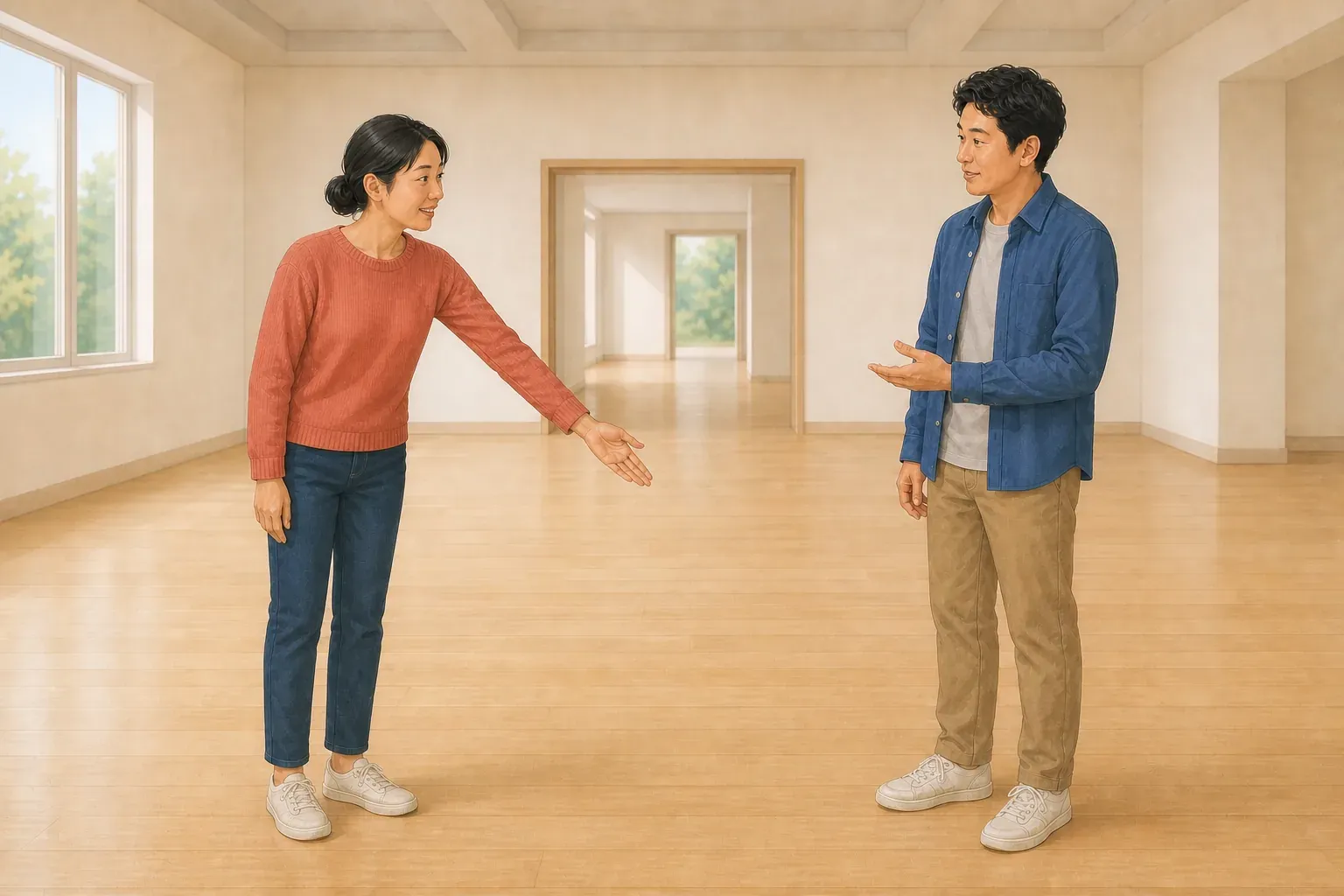
Answer
そこです。
It is there, by the listener.
そこ is the place around the listener.
Conversation 3
あそこ: a place farther away
Question
どこですか。
Where is it?
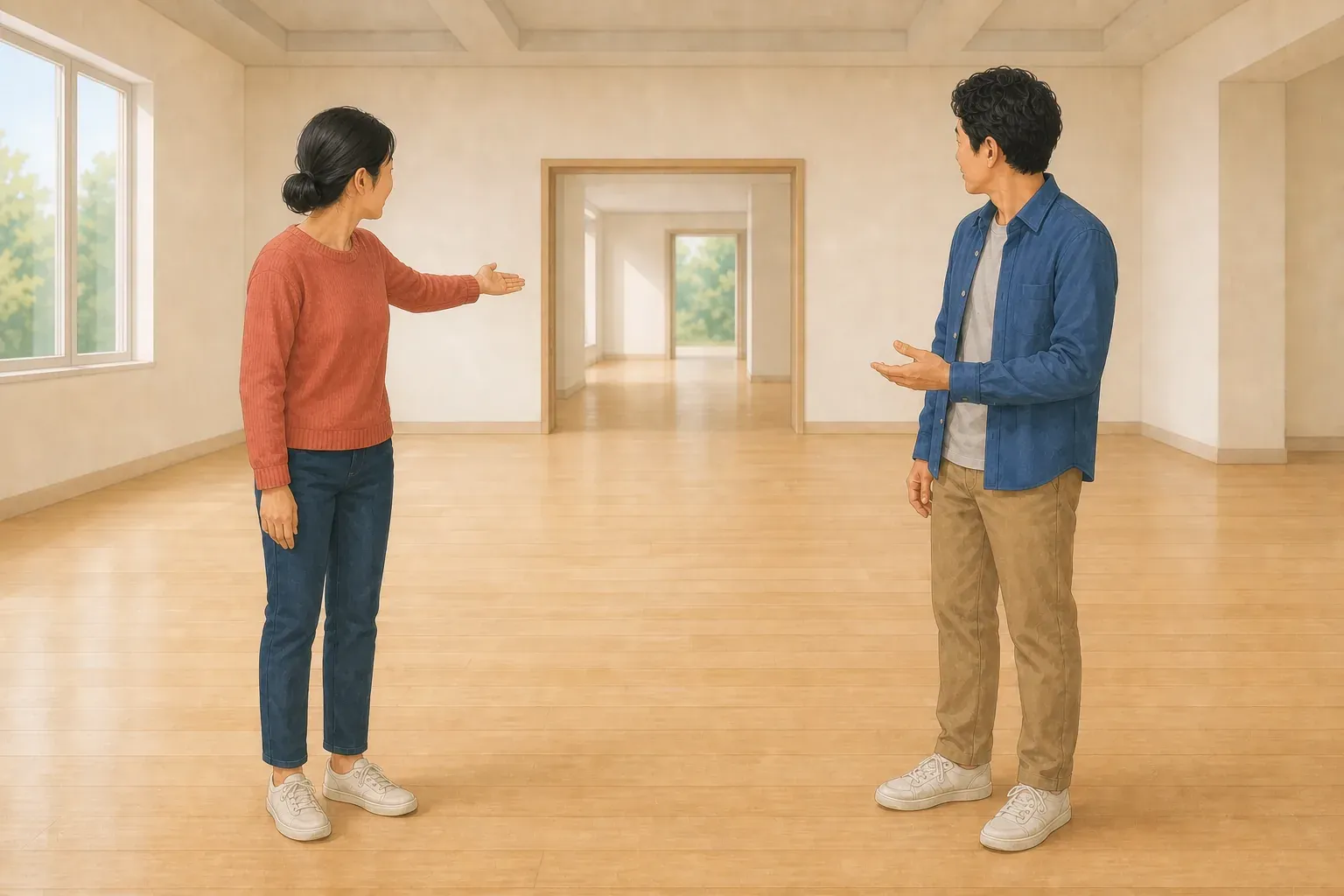
Answer
あそこです。
It is over there.
あそこ is a place away from both people.
These three answers point to places. どこ asks which place; it does not add another position.
Bring back Lesson 6
Keep places separate from things
The sound pattern is related, but these are separate words with separate jobs. Use the first row to identify a place and the second row to identify a thing.
- Places
- ここ・そこ・あそこ
- here · there · over there
- Things
- これ・それ・あれ
- this one · that one · that one over there
- Question
- どこ
- which place? · where?
Keep the three place words together
Each word names a place. Retrieve the place before checking the English reminder.
New word
ここ
here
New word
そこ
there (near the listener)
New word
あそこ
over there (away from speaker and listener)
Build a sentence
Point to a place or ask where it is
ここ・そこ・あそこ / どこ
Use ここ, そこ, or あそこ to identify a place. Use the already-known question word どこ when the place is missing.
In the opening, 店はどこですか asks about a known shop, and あそこです points to the answer. The familiarか remains the question ending; this is not a new question rule.
A simple place statement
Reading: ここはへやです。
Meet two basic place nouns
These give the place patterns somewhere concrete to work. Read 部屋 as へや and 店 as みせ in the checked examples.
New word
部屋
room
New word
店
shop; store
Meet ある and いる
These are the dictionary-form vocabulary identities. Sentences in this lesson use two explicitly checked polite forms.
New word
ある
to exist; to be present
The checked polite form used in this lesson is あります.
New word
いる
to exist; to be present (animate beings)
The checked polite form used for the living referents here is います.
Vocabulary form and sentence form
Use the two checked polite forms shown
Learn these two exact pairs for the sentences here. They are not a rule for converting every Japanese verb, and this lesson does not introduce verb groups.
- Vocabulary formある
- Polite form used hereありますthe non-living objects and places shown here
- Vocabulary formいる
- Polite form used hereいますpeople and other living beings, such as animals, in this beginner model
No negative or past forms are needed yet. Use only the checked forms displayed in the examples below.
Build a sentence
Say what or who exists in a place
Place に N が あります/います
Say the place first. Then name the person or entity present there, followed by the checked polite existence form.
In this pattern, に marks the place where someone or something exists. が comes after the person or thing that exists. Both explanations are limited to this pattern.
Place-first existence statement
Reading: へやにほんがあります。
Place-first existence statement
Reading: がっこうにせんせいがいます。
One marker, a bounded job
Keep this に separate from time に
A particle does not need one English translation for every sentence. Notice the job it does inside each complete pattern.
- Specific time for an action · Lesson 10 review
- 午後三時に休みます。
- ごごさんじにやすみます。
- に marks the specific time used for the action here.
- Place of existence · this lesson
- 部屋に本があります。
- へやにほんがあります。
- に marks the place where the book exists.
This is not movement toward a destination, and it does not introduce a marker for where an action happens. Those are different future patterns.
Choose from the referent in the example
Keep あります and います separate
In the examples here, います is used for people and other living beings such as animals. あります is used for the non-living objects and places shown here. This practical boundary is not a complete classification rule for every possible Japanese referent.
- Book · non-living example本があります。
- Teacher · living example先生がいます。
Check your recall
Recall the place map and first existence pattern
Try each prompt before opening the answer.
Which place word points to an area away from both speaker and listener in this model?
Show the place word
あそこIt points to that place over there in the physical model used here.
どこIs this another distance point, or the question word?
Show the role
どこIt asks which place or where; it is not a fourth point.
学校に先生が__。Choose the checked polite existence form for the teacher.
Show the sentence
学校に先生がいます。/がっこうにせんせいがいます。The living referent in this example takes います.
Rebuild “There is a book in the room.”
Show the place-first sentence
部屋に本があります。/へやにほんがあります。The place comes first with に; the book is followed by が and あります.
Learn 中・外・上・下
Use each word as a concrete location relative to another noun. The English translation follows the checked example rather than defining every possible use.
New word
中
inside
New word
外
outside
New word
上
above; on in the example here
New word
下
below; under
Add 前・後ろ・近く・隣
Keep 前 and 後ろ spatial here. 近く is broadly nearby; 隣 is specifically adjacent or neighboring in the example taught.
New word
前
in front of
New word
後ろ
behind
New word
近く
near; nearby
New word
隣
next to; neighboring
Reuse a known relationship
Let the noun before の set the reference point
reference noun + の + location word
In 本の下, the book supplies the reference point and 下 gives the location below it. This reuses the known noun relationship; it does not create a new grammar pattern or make のequal one English word in every sentence.
Put the known entity first
Now answer where it is
N は Place に あります/います
If the person or object is already the topic, put it first with は and then say its location. Begin with a very short place word, then read the same order with reference points.
カメラはかばんの中にあります。
Reading: カメラはかばんのなかにあります。
The camera is in the bag.
人は家の外にいます。
Reading: ひとはいえのそとにいます。
The person is outside the house.
カメラは本の上にあります。
Reading: カメラはほんのうえにあります。
The camera is on the book.
ペンは本の下にあります。
Reading: ペンはほんのしたにあります。
The pen is under the book.
店は会社の前にあります。
Reading: みせはかいしゃのまえにあります。
The shop is in front of the company.
先生は学校の後ろにいます。
Reading: せんせいはがっこうのうしろにいます。
The teacher is behind the school.
学校は家の近くにあります。
Reading: がっこうはいえのちかくにあります。
The school is near the house.
会社は学校のとなりにあります。
Reading: かいしゃはがっこうのとなりにあります。
The company is next to the school.
Use the complete sentences to keep 前 and 後ろ tied to a clear reference point. A small flat picture can make front and behind ambiguous.
A short conversation
Where is the book? Where is the teacher?
Read the two questions, then notice how each answer gives a location.
Speaker B
本はどこですか。
Reading: ほんはどこですか。
Meaning: Where is the book?
Speaker A
本はそこにあります。
Reading: ほんはそこにあります。
Meaning: The book is there.
Speaker B
先生はどこですか。
Reading: せんせいはどこですか。
Meaning: Where is the teacher?
Speaker A
先生は学校にいます。
Reading: せんせいはがっこうにいます。
Meaning: The teacher is at the school.
Notice
- Both questions use どこですか to ask for a location.
- The book answer uses あります. The teacher answer uses います.
Try a different place
Keep the question, then answer with another location you already know.
Check your recall
Recall relation words and a full location sentence
Try each prompt before opening the answer.
ペンは本の__にあります。Retrieve “under” in this checked sentence.
Show the sentence
ペンは本の下にあります。/ペンはほんのしたにあります。The book is the reference point; 下 gives the location below it.
Which word is specifically adjacent or neighboring: 近く or 隣?
Show the distinction
隣(となり)隣 is next to or neighboring here. 近く is the broader nearby relation.
学校+の+後ろBuild “behind the school.”
Show the phrase
学校の後ろ/がっこうのうしろThe school supplies the reference point before の.
Rebuild “The person is outside the house.”
Show the full sentence
人は家の外にいます。/ひとはいえのそとにいます。The known person comes first; 家の外 gives the place; this living example ends in います.
Keep location concrete
- ここ・そこ・あそこ identify places; どこ asks which place.
- これ・それ・あれ remain separate words for things.
- The noun before の supplies the reference point in the relation phrases practised here.
- ある → あります and いる → います are two explicitly checked pairs, not a general conjugation rule.
- Place に N が あります/います says what or who exists in a place.
- N は Place に あります/います says where a known person or object is.